Trump's Tariffs Struck Down by Supreme Court - What It Means for Law Firms? 📉

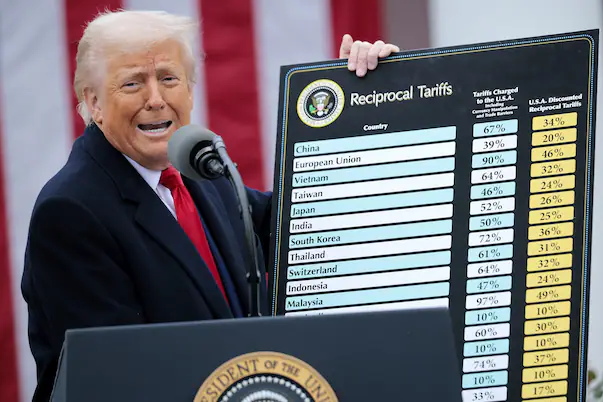
Donald Trump's tariff strategy has just suffered a major setback.
Here's all you need to know and what it means for law firms!
📢 What happened?
In a 6-3 decision, the US Supreme Court held that Trump had acted ultra vires (beyond his legal power) by imposing his sweeping tariffs, without congressional approval.
Trump sought to justify his tariffs under the International Emergency Economic Powers Act (IEEPA) - a law created to address genuine national emergencies.
Relying on this, the President announced wide-ranging tariffs last April, on what he called "liberation day". These tariffs targeted dozens of countries, including China, the EU, Canada, Mexico, Japan and the UK, among others.
On 20th February 2026, the Supreme Court rejected Trump's approach, stating that "that IEEPA does not authorise the president to impose tariffs". In short:
- The IEEPA was never intended to give the President power to impose blanket tariffs.
- The primary authority over trade policy rests with Congress - not the Executive.
- Lower courts were right about the tariffs' unlawfulness.
🚢 Is the Trade War Over?
Not even close.
Within hours of the ruling, Trump announced a new global tariff of 10%, this time relying on the Trade Act of 1974.
What's changed? Trump has moved from broad emergency powers to a more structured statutory route. Under section 112, tariffs of up to 15% can be introduced for 150 days to address serious balance-of-payments concerns, whereas other legal routes require formal investigations into national security or unfair trade.
In short: tariffs are still a tool on the table, however, they can now only be used within a much stricter legal and procedural box.
💸 Are Refunds on the Table?
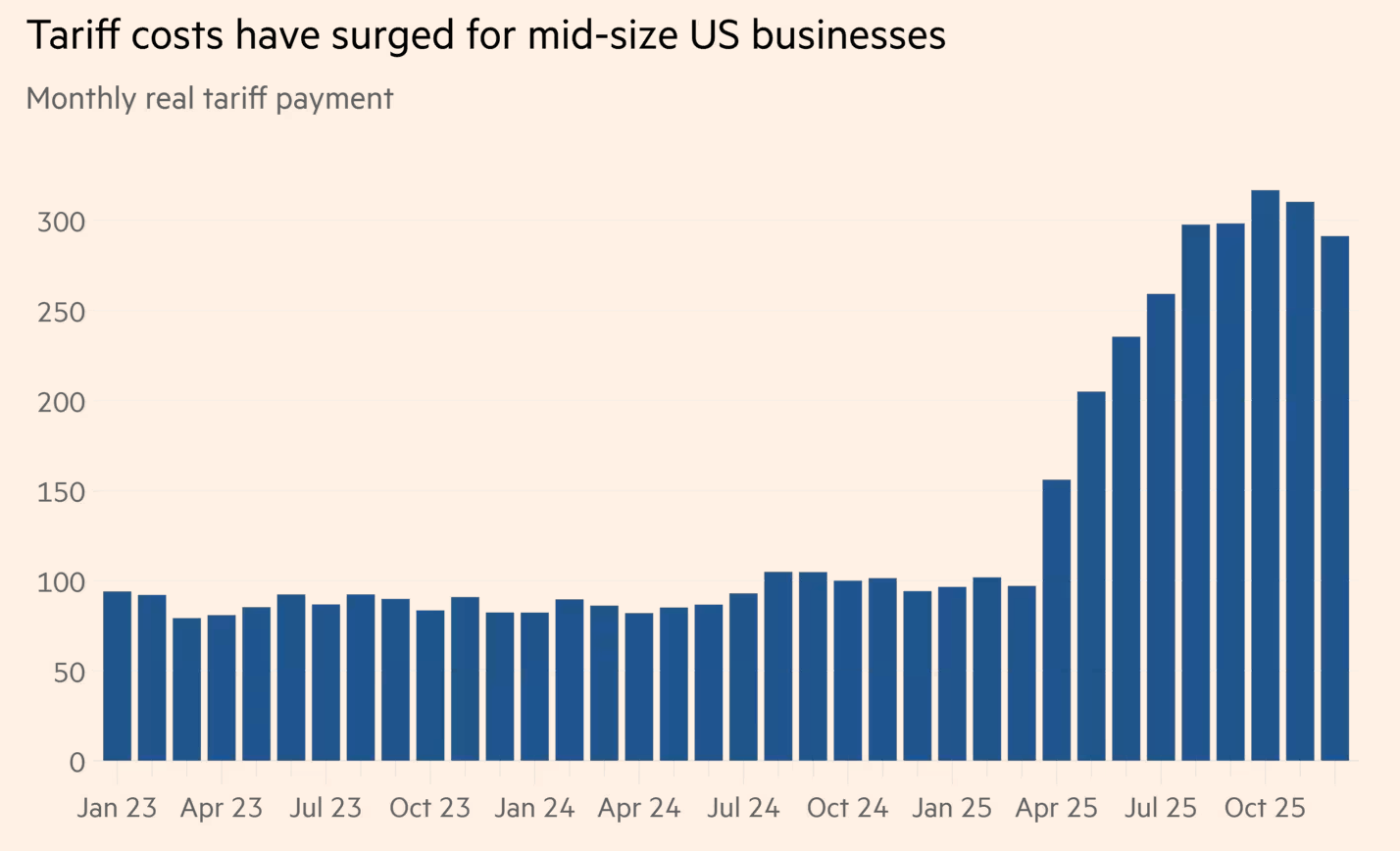
Tariff revenues from 2025 are estimated at $300bn, with US businesses reportedly absorbing around 90% of the burden, much of which was then passed on to consumers through higher prices.
If the tariffs are struck down entirely, importers could pursue massive refund claims. This week, FedEx have already filed a lawsuit seeking a "full refund" of Trump's emergency tariffs, signalling that large corporates are willing to test this in court. However:
- Trump's administration have rejected the idea of repayments.
- Justice Brett Kavanaugh warned that the process would likely be a “mess”, and
- The resulting litigation could drag on for years.
💡 Why does it matter?
This is about far more than just tariffs. The Supreme Court’s decision draws a clear legal boundary around who controls trade policy and how predictable the rules are for business.
For companies, tariffs that can be imposed or struck down overnight create uncertainty. This makes planning harder and increases legal and commercial risk.
It also raises the risk of more legal challenges, especially around:
- 🚧 Future tariffs imposed under new laws, and
- 💸 Possible refund claims for duties already paid.
With hundreds of billions of dollars potentially at stake, this could unravel into a major legal and commercial issue, which could shape disputes and business decisions for years.
What does this mean for law firms?
🌍 International Trade teams will be at the centre of this. When tariff policies are struck down and replaced almost overnight, businesses need fast, technical advice. This means more work for:
- 📦 International trade lawyers – Advising importers, exporters and manufacturers on which tariffs are enforceable, and whether the new Section 122 tariffs (up to 15% for 150 days) lawfully apply, and how long they are likely to remain in force.
- 🧾 Customs and compliance specialists – Working on customs classifications, exposure modelling, mitigation strategies, and compliance with US and World Trade Organisation rules.
- 🏛️ Trade investigations lawyers – Representing clients in formal investigations under the Trade Act into alleged unfair trade practices or national security risks, including preparing submissions and arguing for product-specific exclusions.
For example, a lawyer advising a UK car manufacturer exporting to the US might analyse whether the new 10% tariff applies to its vehicles, prepare submissions during a US trade investigation, and assess whether changing the supply chain could reduce tariff exposure.
With billions in tariff revenue potentially at stake, and refund claims looming, this kind of trade work is unlikely to slow down.
⚖️ Public Law and Regulatory teams will be busy because this is, at heart, a separation of powers case. The Court has drawn a clear line around executive authority, opening doors to more legal challenges if the government misuses the Trade Act. This creates more work for:
- 📜 Public law / Judicial review lawyers – Challenging new tariffs if the statutory powers are misapplied or if required investigations and procedures are bypassed.
- 🏛️ Regulatory lawyers – Scrutinising whether legal preconditions are met, whether the economic evidence is properly supported, and whether procedural fairness has been followed.
- ⚠️ Regulatory risk advisers – Advising multinational clients on regulatory change, especially those that have already restructured supply chains once and want more legal certainty before doing so again.
If a new tariff is imposed without a proper investigation, lawyers may challenge it before the US Court of International Trade, arguing that the legal threshold (such as a “large and serious” balance-of-payments problem) has not been lawfully established.
💼 Dispute Resolution and Litigation teams will see more work as tariffs flow straight into contracts. Sudden changes in duties put pressure on pricing clauses, force majeure provisions, and material adverse change clauses. This means more work for:
- ⚖️ Commercial litigators – Acting for importers seeking repayment of unlawfully collected duties and dealing with complex restitution claims.
- 🛡️ Disputes lawyers – Navigating sovereign immunity arguments and parallel disputes between suppliers and distributors over who ultimately bears the cost.
- 📑 Contract disputes specialists – Advising on and litigating disputes where tariff changes or their invalidation upset the agreed risk allocation in supply contracts.
With FedEx already suing to reclaim duties - represented by US law firm Crowell & Moring, it’s clear that refund litigation and tariff disputes are not just theoretical, but already moving through the courts.
🔗 How these teams overlap
In practice, these teams won’t work in isolation:
- 🌍 Trade lawyers advise on whether tariffs apply and how to reduce exposure.
- ⚖️ Public and regulatory lawyers challenge unlawful measures and assess legal risk.
- 💼 Litigators handle refund claims and contract disputes when things go wrong.
Together, they help clients navigate a trade environment that is legally uncertain, highly technical, and commercially high-stakes.
🎯 Student Takeaway:
Trump's tariff ban is a live example of how a single court decision can create work across multiple areas of law, from international trade and public law to commercial disputes. It shows how legal rules on executive power and regulation feed directly into business decisions, contracts, and litigation risk. For law students, it’s a reminder that big political and constitutional issues often turn into very practical, high-stakes legal work for clients.