
Elon Musk's Trillion Dollar Merger - SpaceX and xAI 🚀

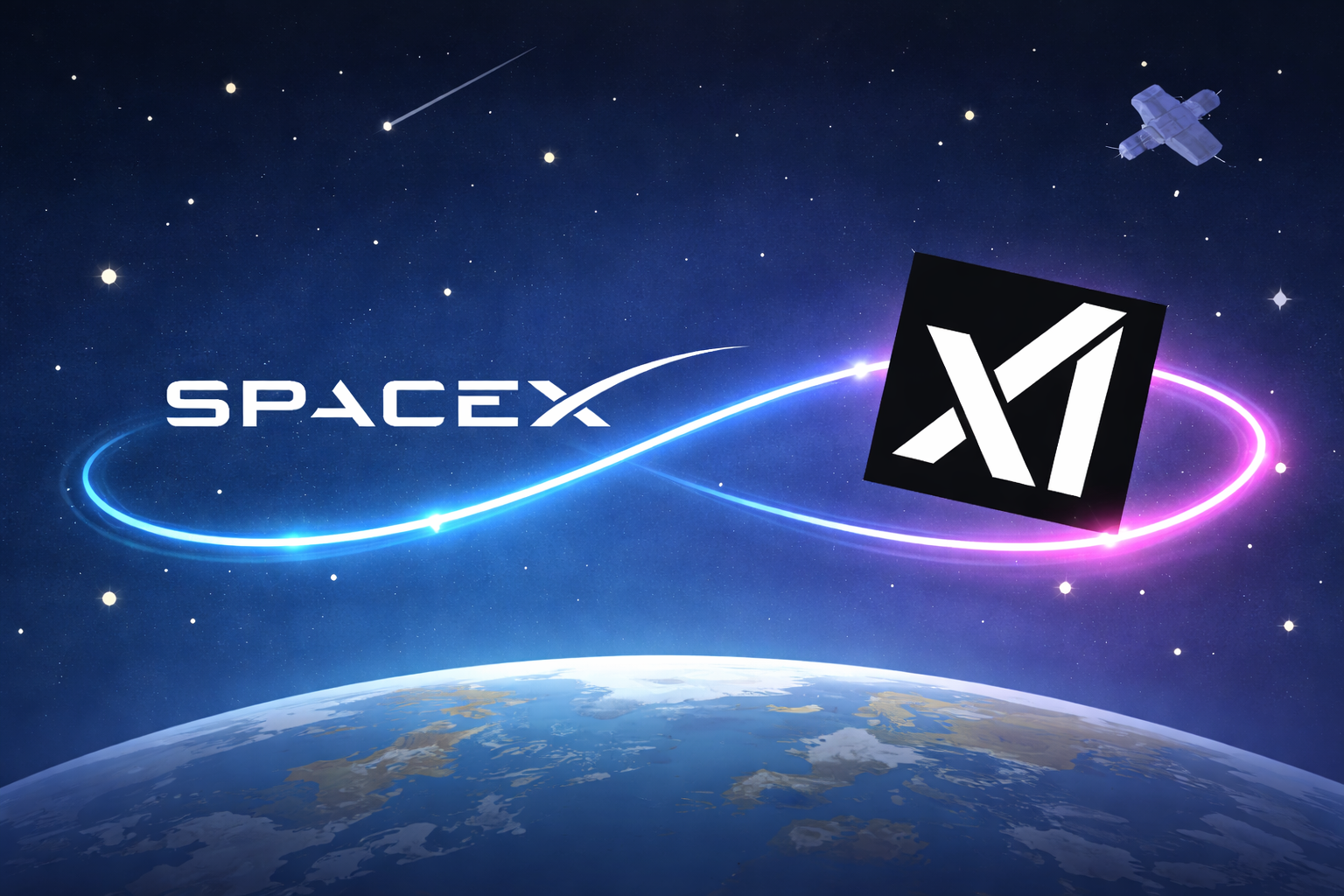
Elon Musk has combined SpaceX with xAI in a deal that values the new entity at a staggering $1.25 trillion.
Technically, it’s just a corporate merger - but strategically, Musk is attempting to build AI beyond the limits of Earth.
📢 What happened?
SpaceX has agreed to acquire xAI, Musk’s two-year-old AI venture, through an all-stock transaction.
The numbers are striking:
- SpaceX has been marked at $1 trillion, fuelled largely by surging Starlink revenues
- xAI has been valued at $250 billion, following its latest funding round
- xAI shareholders will receive SpaceX shares on a 7-for-1 exchange ratio
- The combined group is targeting a June IPO, reportedly aiming to raise up to $50 billion - potentially one of the largest public offerings in history.
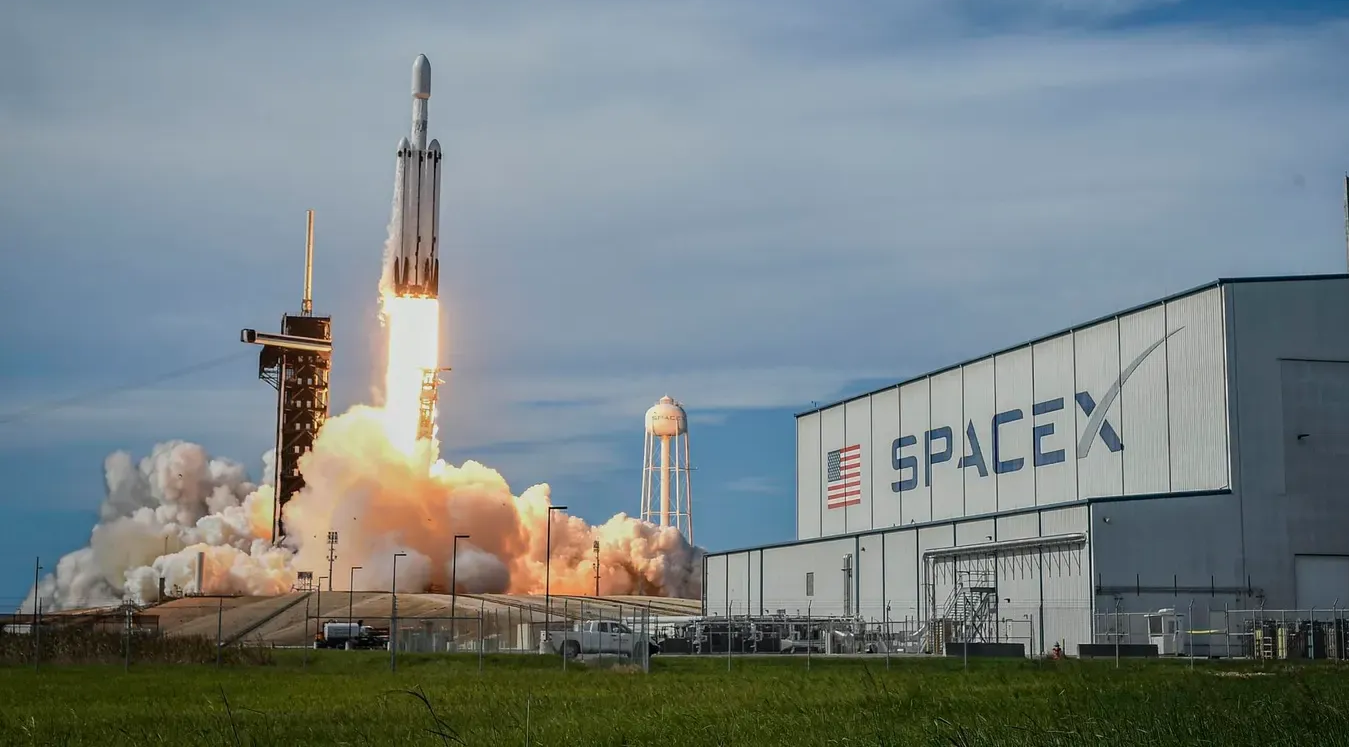
🛰️ Why combine Rockets and AI?
Because Musk believes the biggest constraint isn't AI software, it's power.
Training large AI models requires vast data centres that guzzle electricity and generate significant heat. Musk argues that Earth just can’t keep up without damaging communities or the environment. His solution? Orbital data centres.
By merging SpaceX and xAI, Musk can:
- Use SpaceX's launch facilities to deploy AI infrastructure into orbit
- Power AI systems using space-based solar energy
- Expand AI at a scale that competitors cant beat on Earth
♟️ Logic Behind the Move
Beyond the energy argument, the merger offers several business advantages:
🧩 Full Ecosystem Control
- The merged company now oversees rockets, satellites, AI models and potentially future data infrastructure.
- Controlling the entire pipeline reduces reliance on third-parties, so Musk can now build, launch, power and operate AI infrastructure entirely in-house, cutting costs and reducing dependency risk.
🌍 Long-Term Industrial Vision
- Beyond AI, the deal aligns with Musk’s broader ambitions to build a permanent space-based industrial ecosystem, including lunar manufacturing and satellite production using off-Earth resources.
📊 A Stronger IPO Story
- With a potential June IPO valuing SpaceX at over $1 trillion, the merger reframes the company as a diversified infrastructure platform spanning AI, space, energy and communications.
⚖️ Regulatory Buffering
- AI companies are increasingly under scrutiny for governance, safety and content risk. Integrating xAI into a larger, more diversified group may provide greater resilience against regulatory pressure and compliance shocks.
📌 Which Firms Are Advising on the Deal?
Given the size and complexity of the transaction, heavyweight US law firms are involved:
- Gibson Dunn & Crutcher is advising SpaceX
- Sullivan & Cromwell is advising xAI
Both firms are well known for handling high-value, complex corporate transactions.
Gibson Dunn has significant experience advising founder-led businesses and navigating sensitive governance issues. Sullivan & Cromwell is particularly strong in large-scale M&A, capital markets and transactions that sit at the intersection of technology, finance and regulation, often where competition, securities and public scrutiny collide.
🎯 Student Takeaway
The SpaceX and xAI merger is a live example of how major tech consolidation creates legal work across corporate M&A, capital markets, competition law and regulation. A deal of this size requires complex structuring, governance planning and IPO preparation. For law students, it’s a reminder that the biggest technology stories often translate into high-value, cross-practice legal work behind the scenes.